Construction of the house
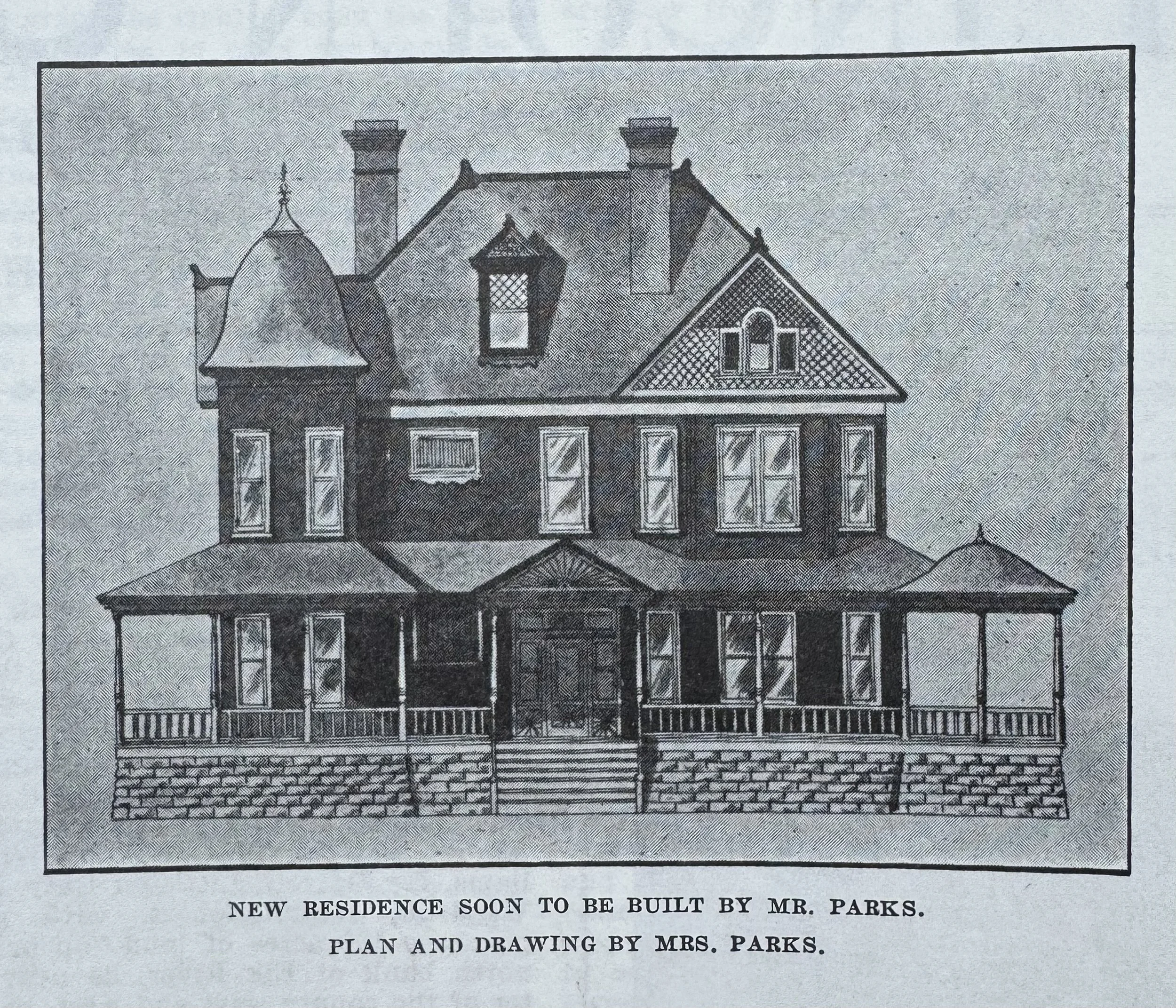
Joel Dodson Parks (1850–1931) was married to Emma Winifred Puckett Parks (1872–1934) on August 20, 1903. According to a contemporary account in The Lincoln County News, Parks determined after his marriage that the existing family residence was not adequate for his new bride, and commissioned architectural plans for a new house to be built on the plantation.
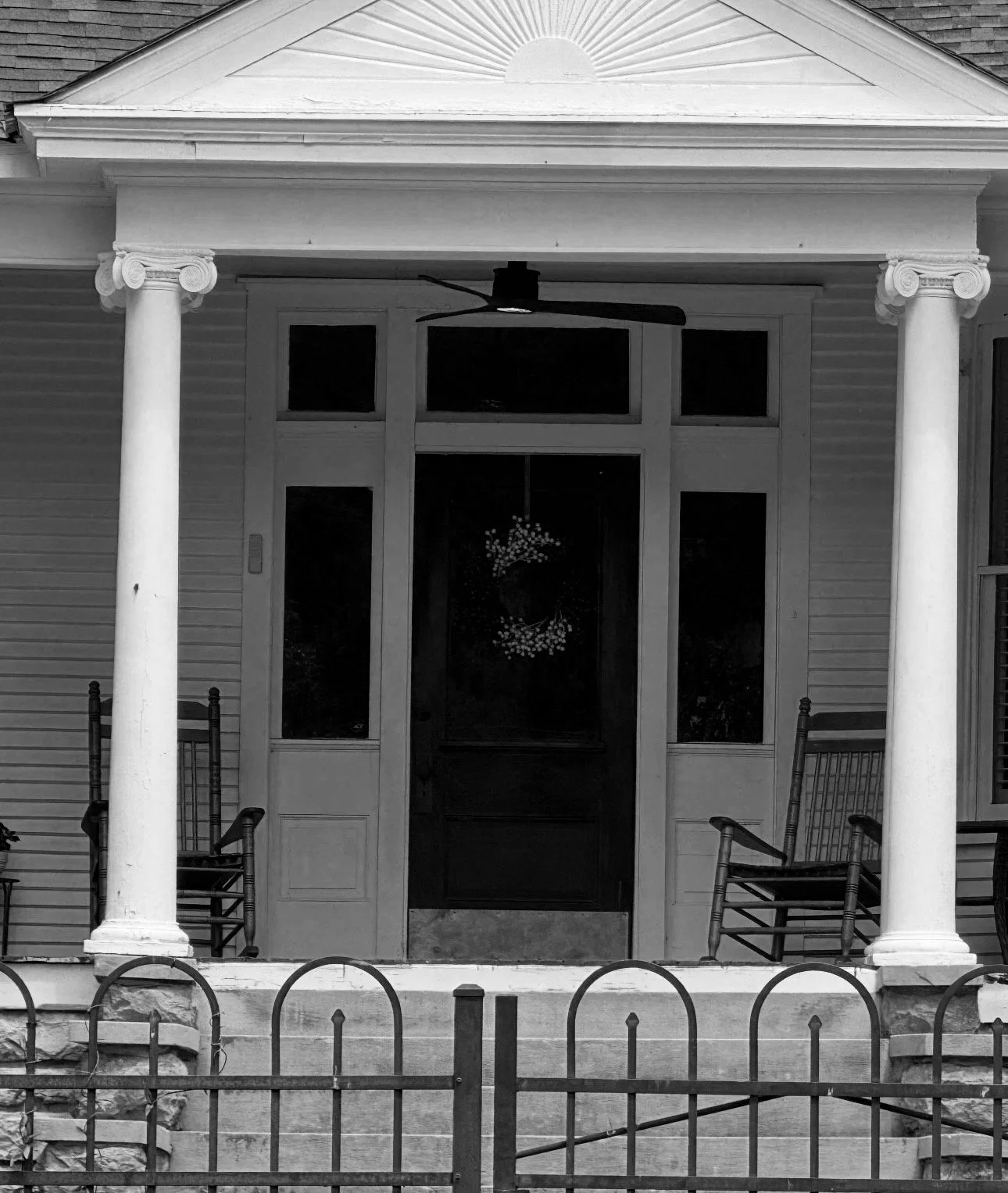
The resulting house, completed sometime between 1904 and 1905, was designed by Mrs. Parks herself, using floor plans reportedly adapted from a set of house plans published by an editor of Ladies' Home Journal around the turn of the century. Elizabeth Parks Beamguard, the couple's only daughter, later recalled identifying several other homes in the region built from the same published design. The house is a two-and-a-half-story frame residence in the Queen Anne style, distinguished by a prominent domed cupola rising from a rounded corner tower on its third floor. The house features a wraparound porch, twelve-foot ceilings, hardwood floors and woodwork typical of substantial residences of the early twentieth century.
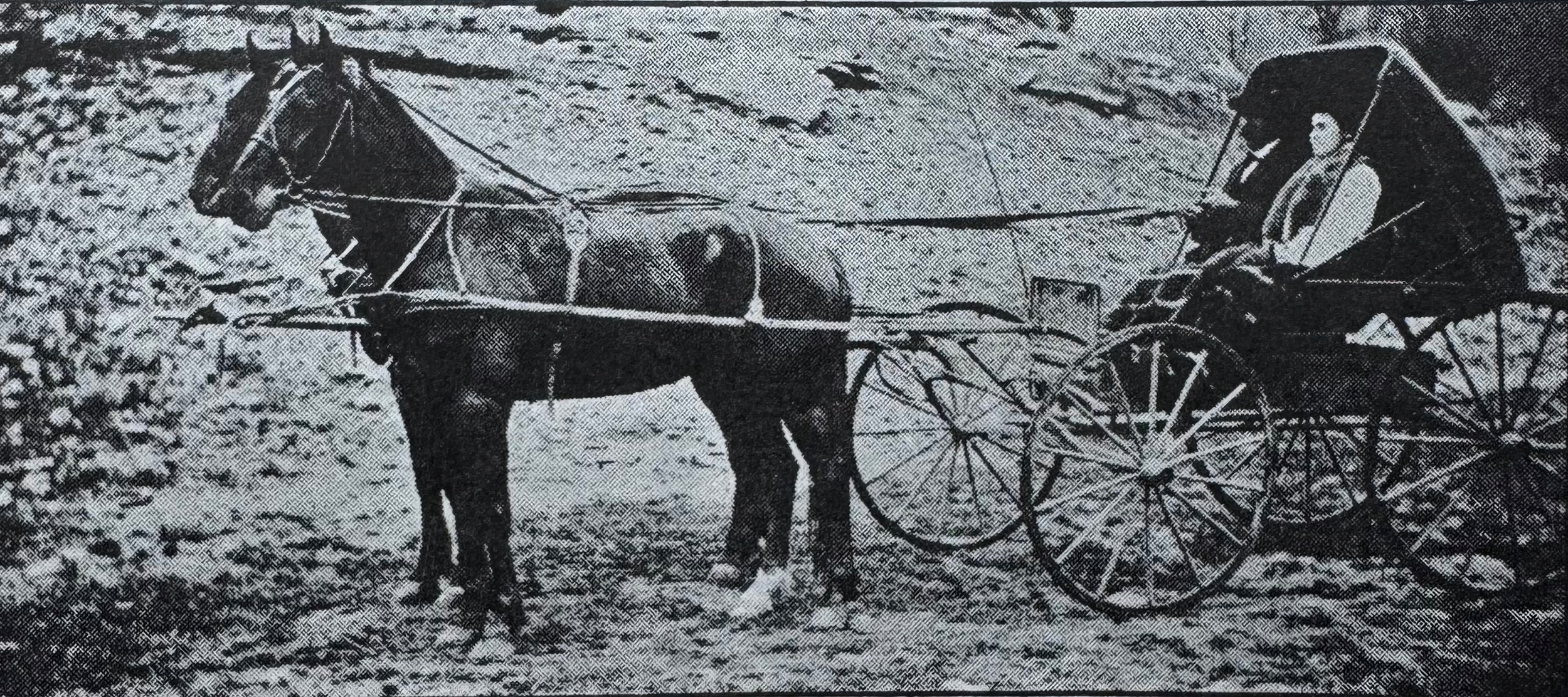
A full-page spread in An Epitome of Progress, an illustrated magazine-format supplement published by the Lincoln County News in May 1904, featured the recently married couple and their intended new residence. The supplement was produced in cooperation with Fayetteville's First National Bank to promote the growth and prosperity of the town and county, and profiled a number of local farms, businesses, and residents alongside Sylvan Hill. The feature included portraits of Joel and Emma Parks, an illustration of the planned house, and a photograph of the couple riding in a carriage drawn by a matched pair of bay horses.
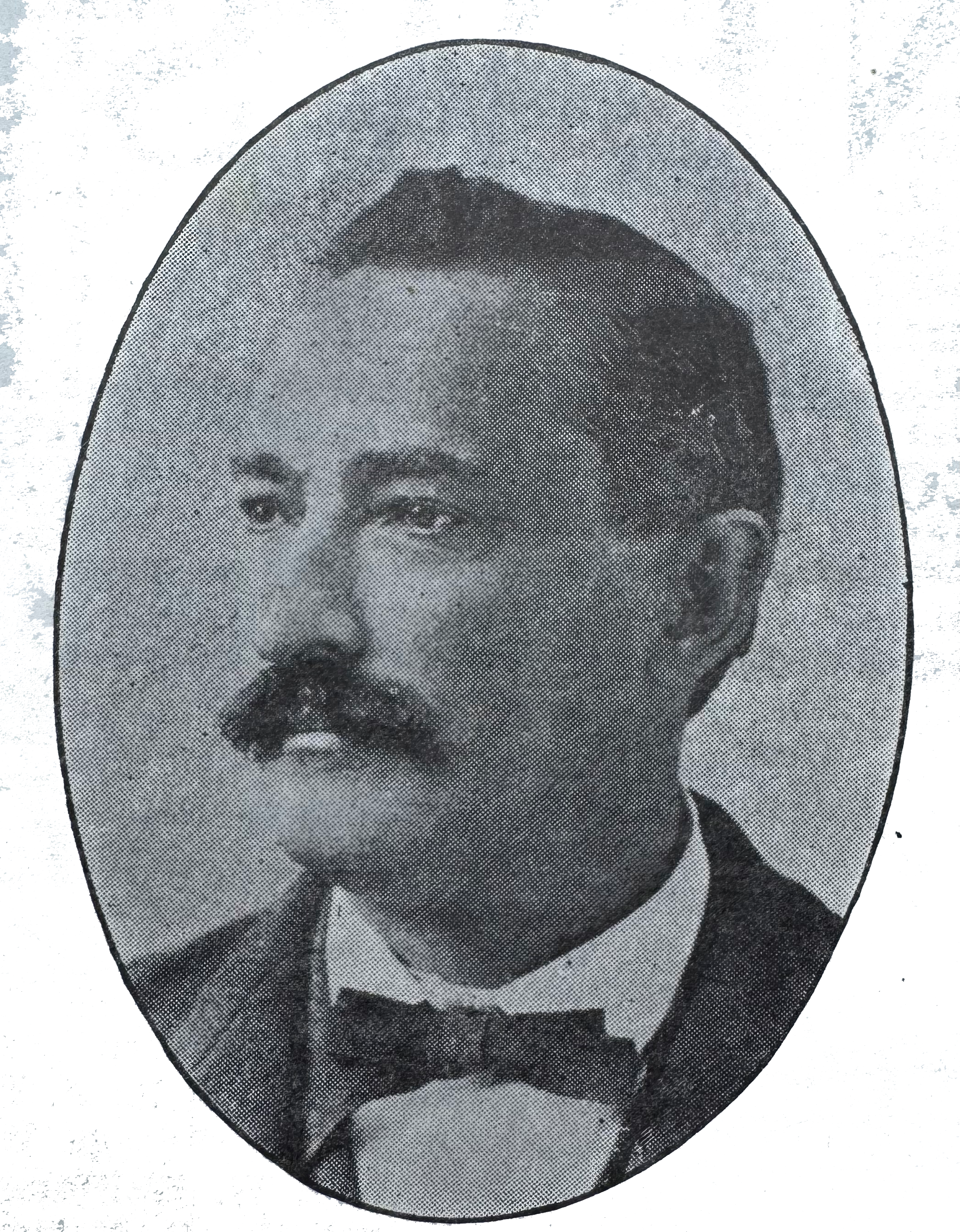
Joel D. Parks
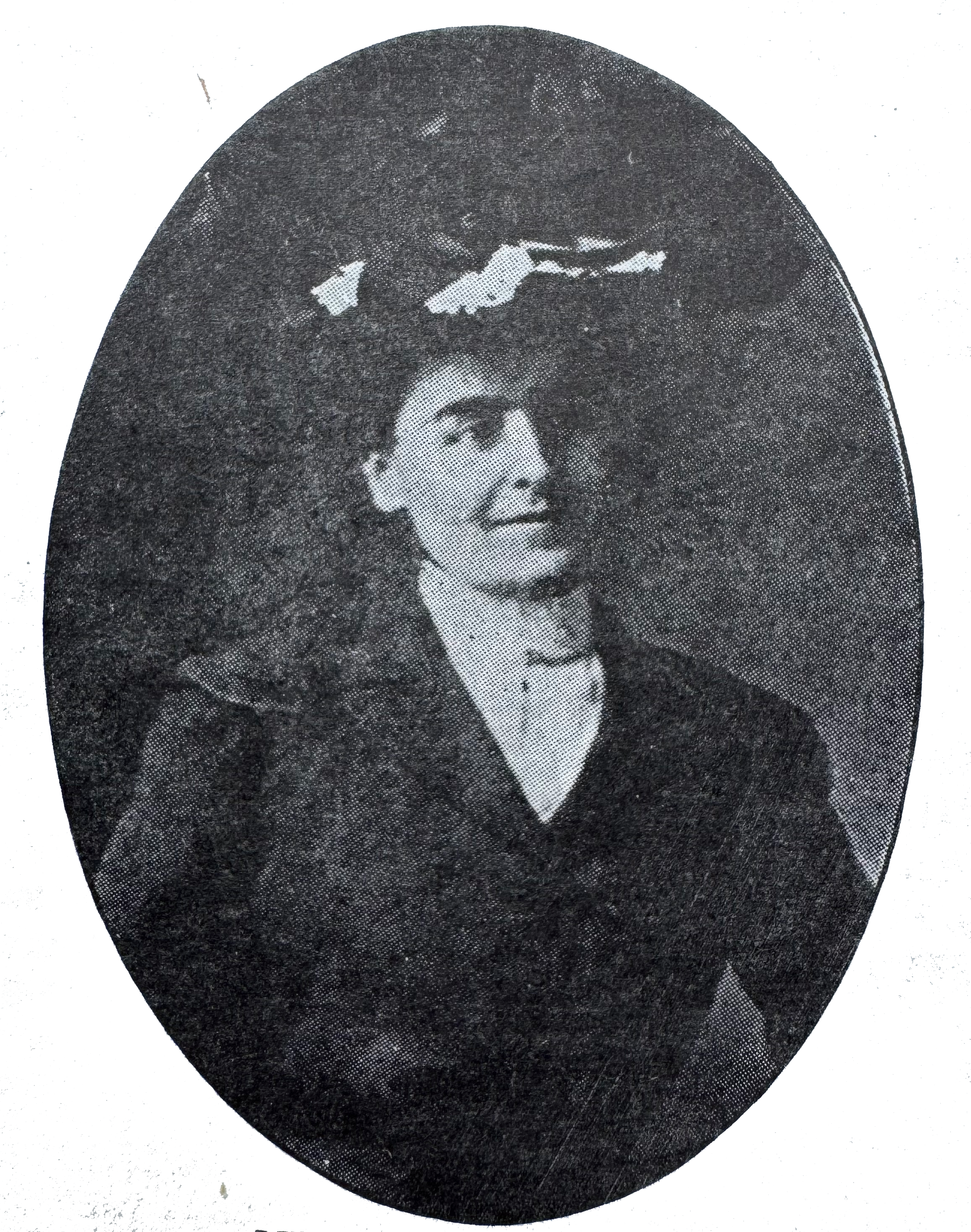
Emma Parks
Sylvan Hill Stock Farm
Under Joel D. Parks's management, the roughly 600-acre farm was devoted primarily to bluegrass pasture and grain cultivation, watered by natural springs and a small creek running through the property. Parks specialized in livestock, both raising and importing. A herd of shorthorn cattle grazed on the bluegrass, while a substantial number of hogs that fed on fall nuts and acorns from the trees were produced each year. Annually he was known to import several hundred mules from Indiana and Missouri to fatten and sell in Southern markets.
Parks was also proprietor of the Fayetteville Stock Yards, at the time the only livestock yard in Lincoln County, which served as a regional shipping point for cattle, hogs, sheep, and mules from Lincoln County and northern Alabama.
Joel and Emma Parks had two children, a son, Joel D. Parks Jr., and a daughter, Elizabeth Fleming Parks Beamguard, neither of whom elected to continue the family's farming tradition. Their daughter, Elizabeth, left Sylvan Hill at age seventeen to attend the University of Tennessee and later became head of the Alabama state library system. Their son, Joel, was a graduate of the U.S. Naval Academy and retired from the Navy as an admiral.