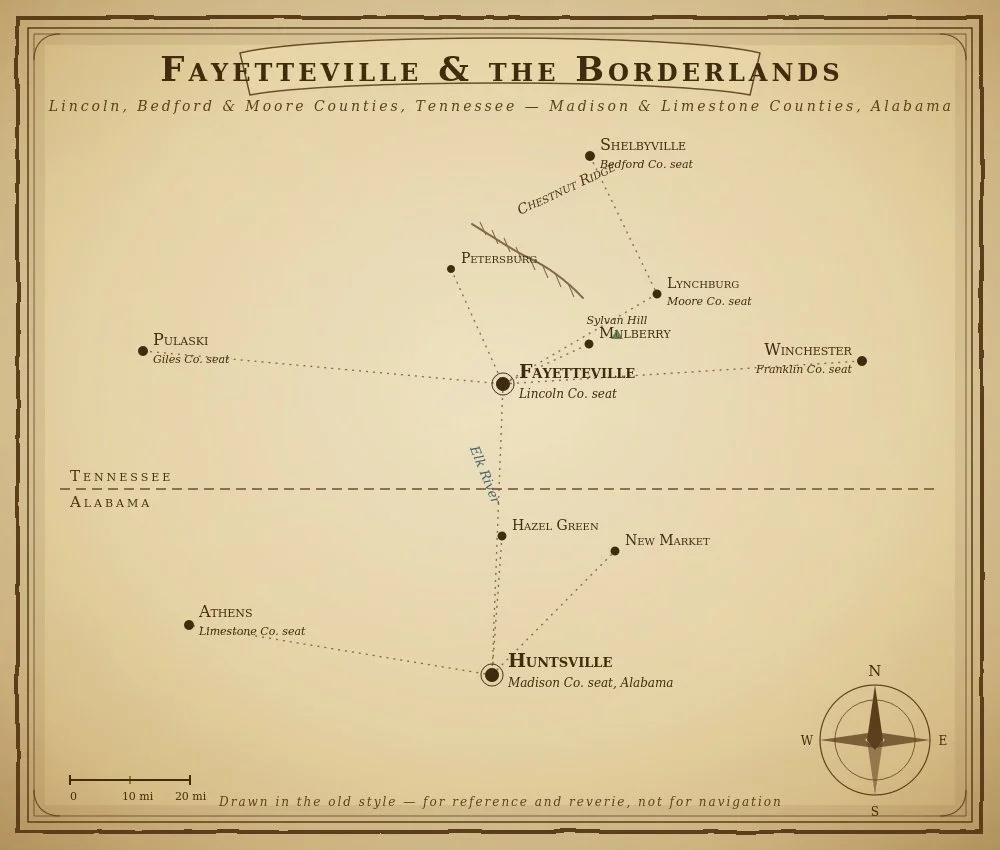
Family origins and early settlement
Aaron Parks was the son of Thomas Parks Jr., whose family had settled in Albemarle County, Virginia before relocating to Wilkes County, North Carolina. After Thomas Parks Jr.'s will was proven in 1791, his land was divided amongst his children, and two enslaved females, Ivy and Hannah, were included as part of his bequests. Five of his six sons eventually migrated westward, with Aaron, John, and Reuben ultimately settling in Tennessee, Ambrose continuing on to Missouri, William possibly settling in Texas, and Thomas III remaining in North Carolina.
Aaron Parks was married to Oney Stubblefield in Wilkes County, North Carolina, in 1784. They, along with several of their children, migrated to Tennessee in 1809, settling on East Norris Creek, roughly midway between the future towns of Fayetteville and Mulberry. The same year of their arrival, Lincoln County was formed from a portion of Bedford County. Family tradition, recorded in a 1984 newspaper feature on Sylvan Hill, holds that Aaron Parks was a Revolutionary War veteran who received a land grant in Tennessee for his service, but a 1983 genealogical study of the family found no surviving military or land-grant records to substantiate this.
After 11 years in Lincoln county, Aaron Parks died in May 1820. According to Lincoln County court records, a committee was appointed to provide support for his widow and children for a period of one year. A census taken later that year recorded eleven enslaved people living in the household of Oney Parks, as well as her bachelor sons and youngest daughter. Oney Parks died in 1847 and was buried, along with Aaron, in Parks Cemetery, a short distance behind the family home.
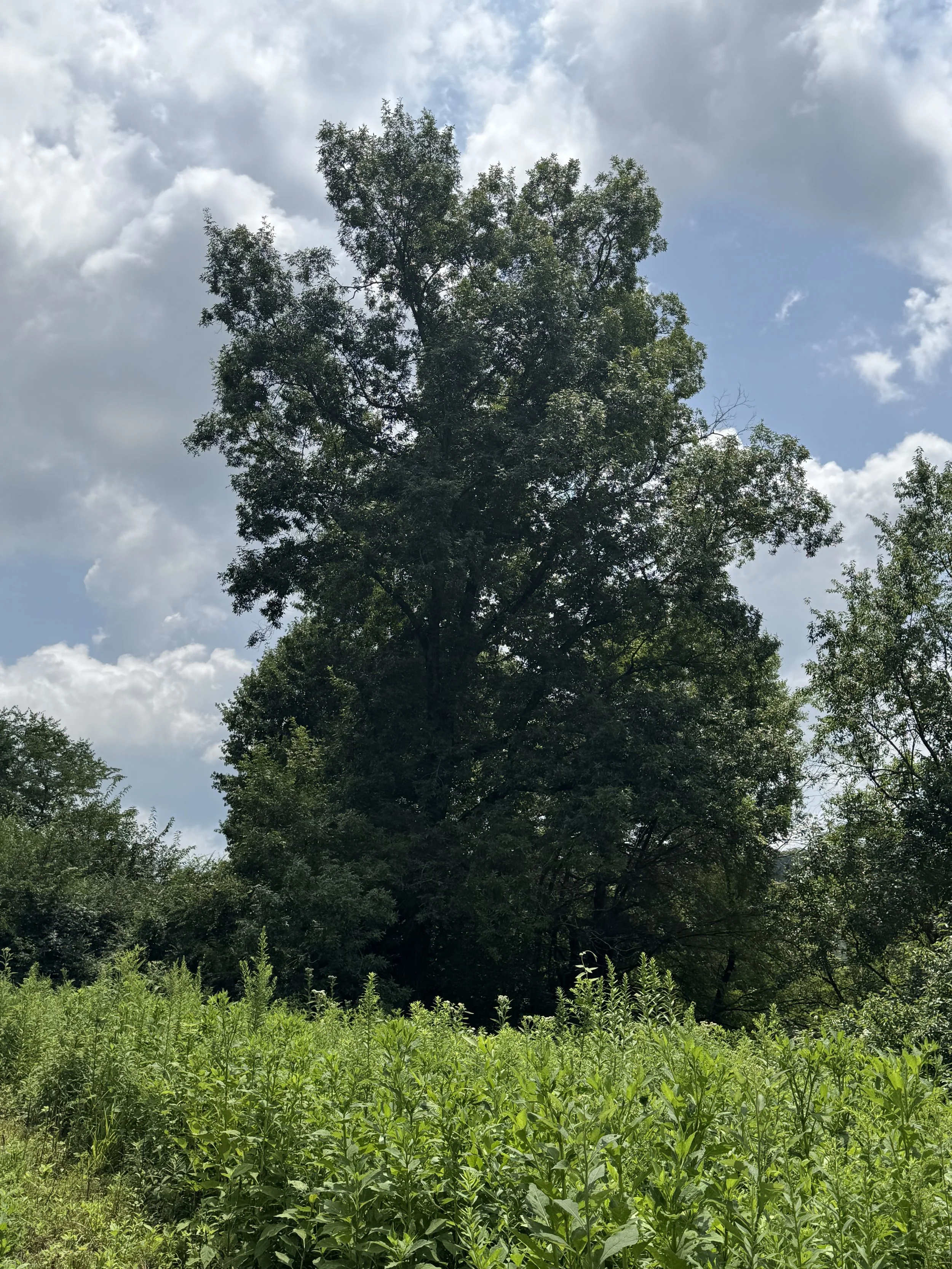
Elm tree marking location of the
family cemetery.
Of Aaron and Oney Parks' twelve children, four—William, Thomas, Frances "Fannie," and Woodruff—remained permanently in Lincoln County. One child, Ambrose, died as a small child in North Carolina prior to the family's migration to Tennessee, while his surviving twin Aaron ultimately migrated on to Arkansas. Woodruff Parks (1799–1870) went on to acquire substantial acreage in Lincoln County; the 1850 federal census recorded him as owning approximately 3,500 acres. The 1850 federal slave schedule for Lincoln County, Tennessee lists Woodruff Parks as the holder of nine enslaved individuals, recorded by age and sex only, as was standard for such schedules. Among those listed were two men (aged 32 and 25), two male children, two women aged 55 and 28, and three female children aged 9, 7, and 2. By 1860 Woodruff Parks is recorded as holding a single enslaved man, aged 35 on the corresponding slave schedule of that year. There is no record of the individuals' names, consistent with most federal slave schedules of the period.
On August 20, 1849, Woodruff Parks and Dovey (Dovy) Cashion were married. They had six children: William C. Parks, Aaron T. Parks, Woodroof J. Parks (who died at age 21 in 1876), Jennie B. Parks Pitts (died at age 19 in 1877), Joseph F. Parks (who later became a lawyer in Spokane, Washington), and Joel Dotson Parks (1850–1931). William C. and Aaron T. Parks, both unmarried farmers and livestock dealers, died within days of each other in November 1901 and share a burial monument.
According to records from the Chancery Court, upon the death of Woodruff Parks in 1870, his estate was divided into four tracts and sold at auction, with the estate finally being settled in 1878. Joel D. Parks acquired two of those four tracts at auction: a 166-acre parcel fronting the Fayetteville and Mulberry Turnpike—the site on which Sylvan Hill would later be built—and an adjoining 125-acre tract.
A 1983 genealogical record indicated that Aaron Parks's original log home stood near the site where his grandson Joel D. Parks later built the present house known as Sylvan Hill. A later publication in 1984 states that a log cabin on the property had by then been relocated to another site, but there is no known information establishing whether this is the same cabin, or how either cabin relates to the present house. Remnants of a hewed-timber structure with a stone chimney remain on the property today, a short distance from the house. The 1984 article also references a farmhouse known within the family as the "homeplace," which was later torn down.
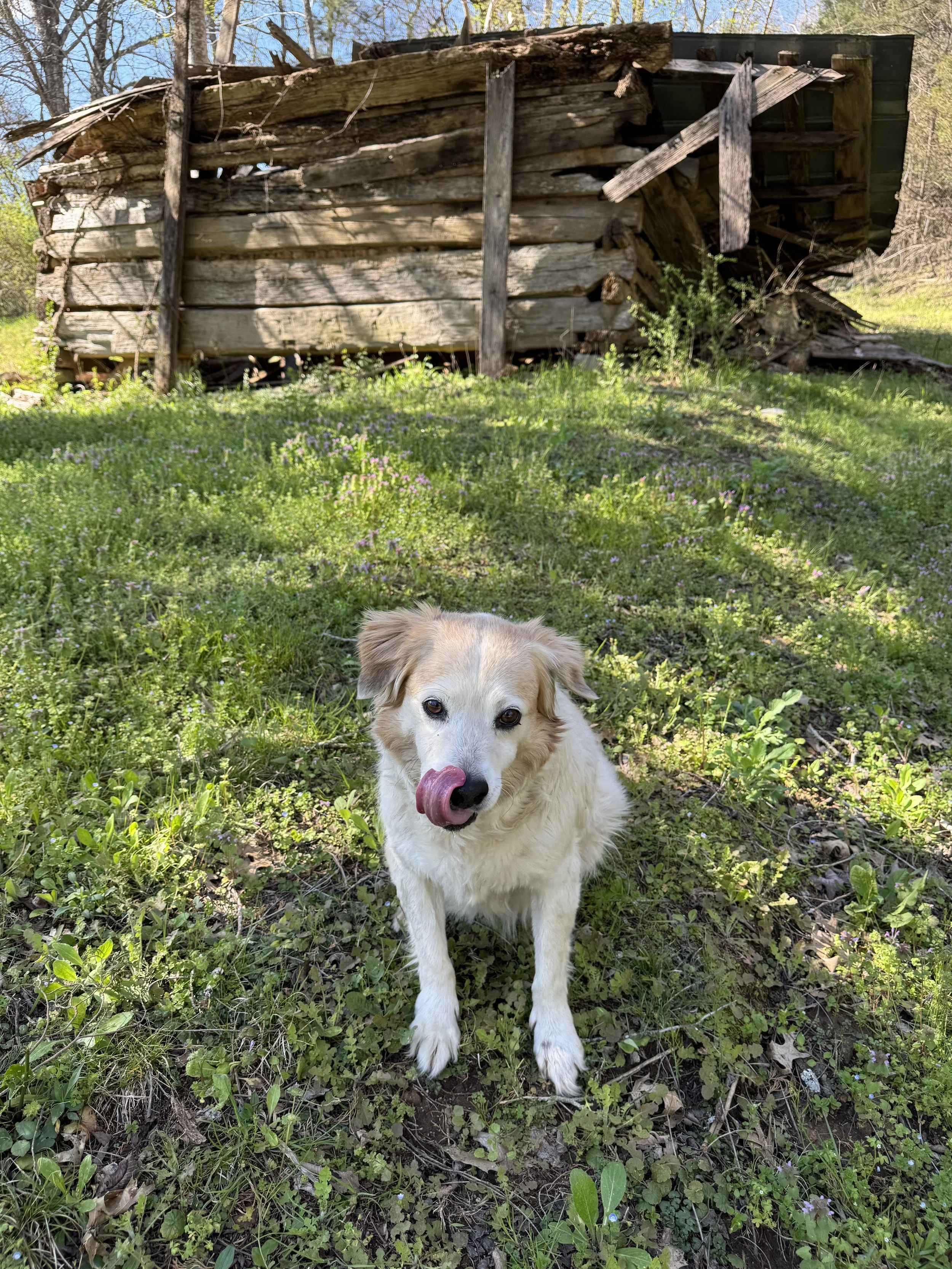
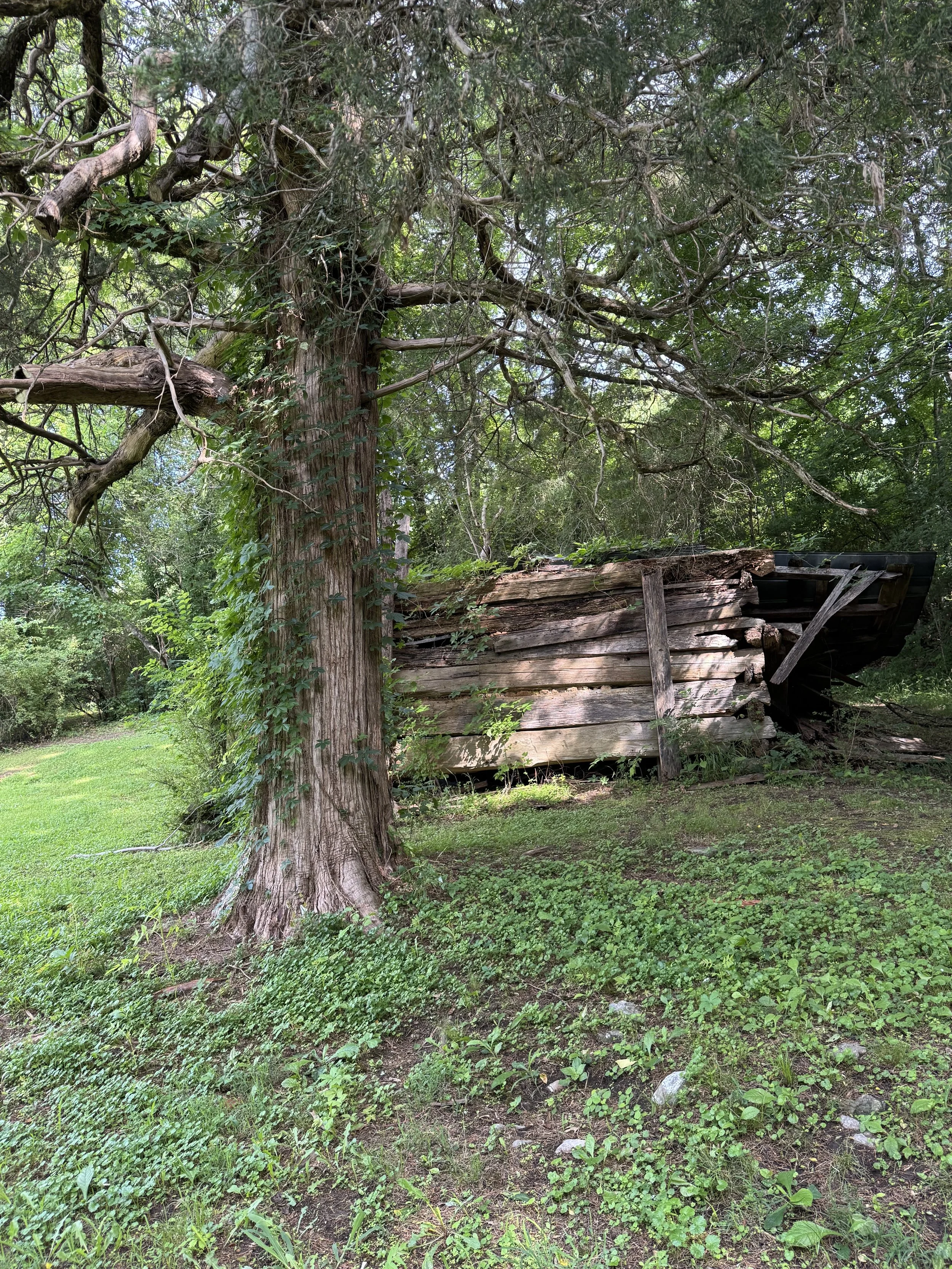
Southeast side
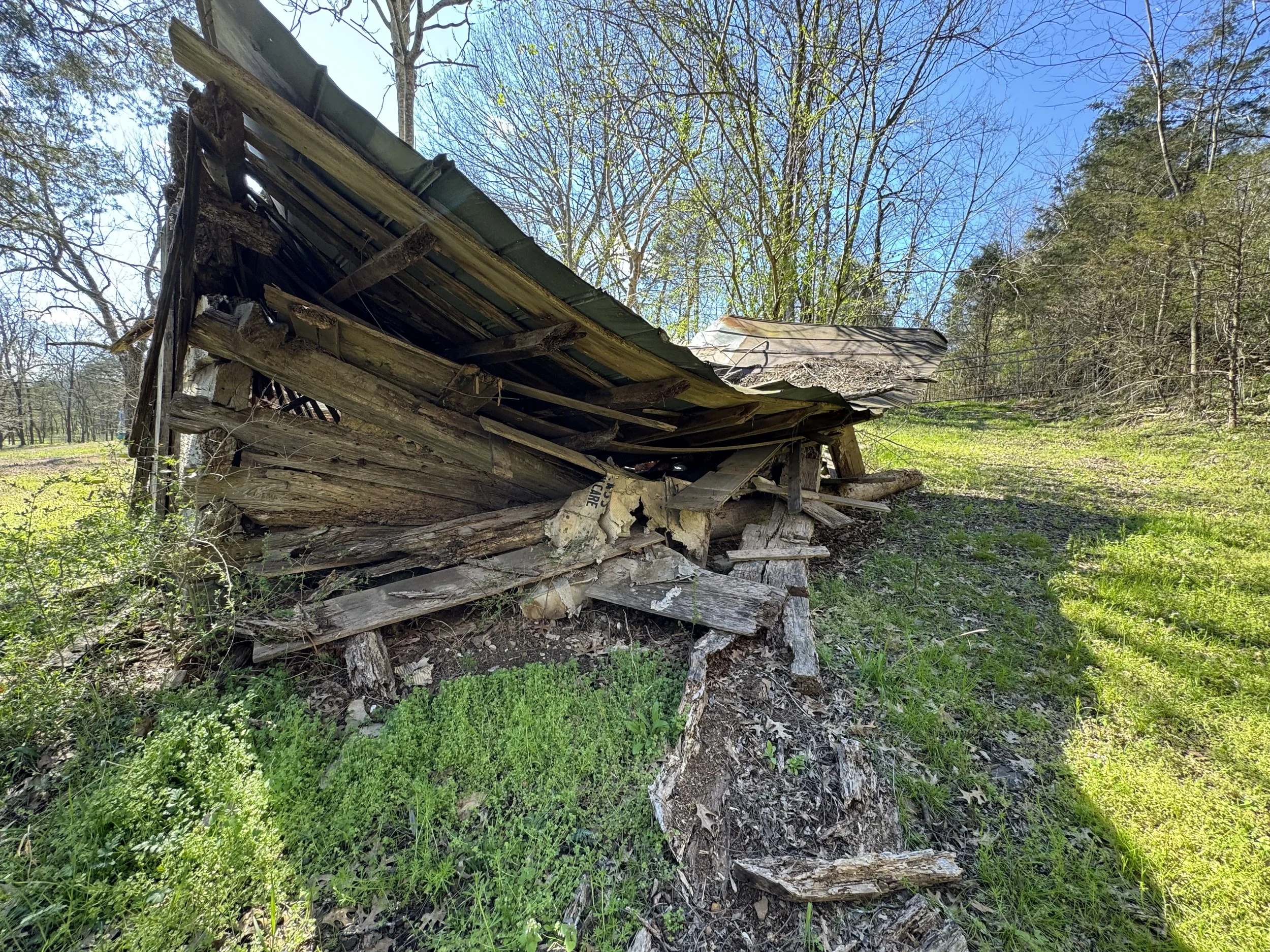
Collapsed cabin entrance
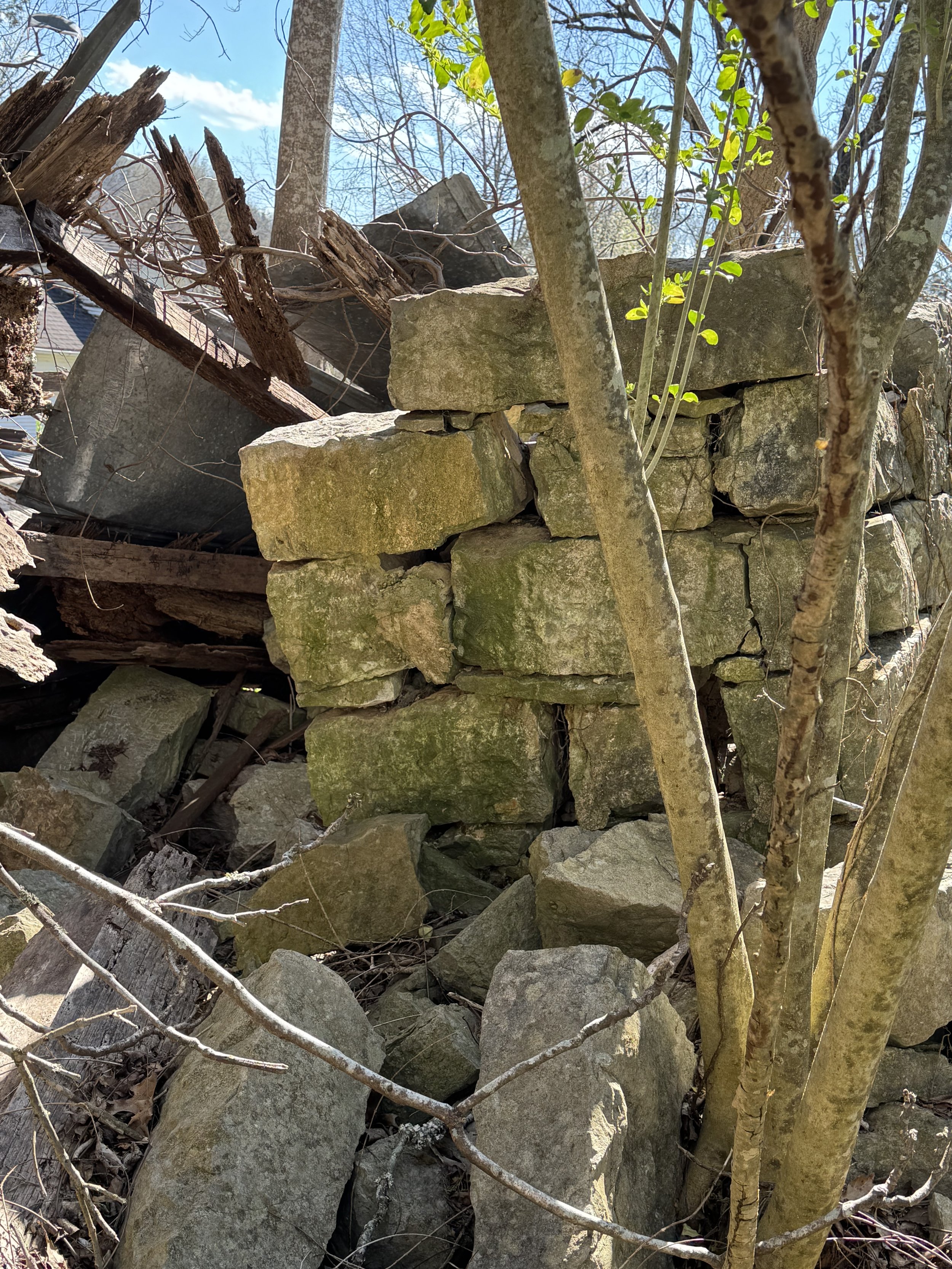
Side of chimney base
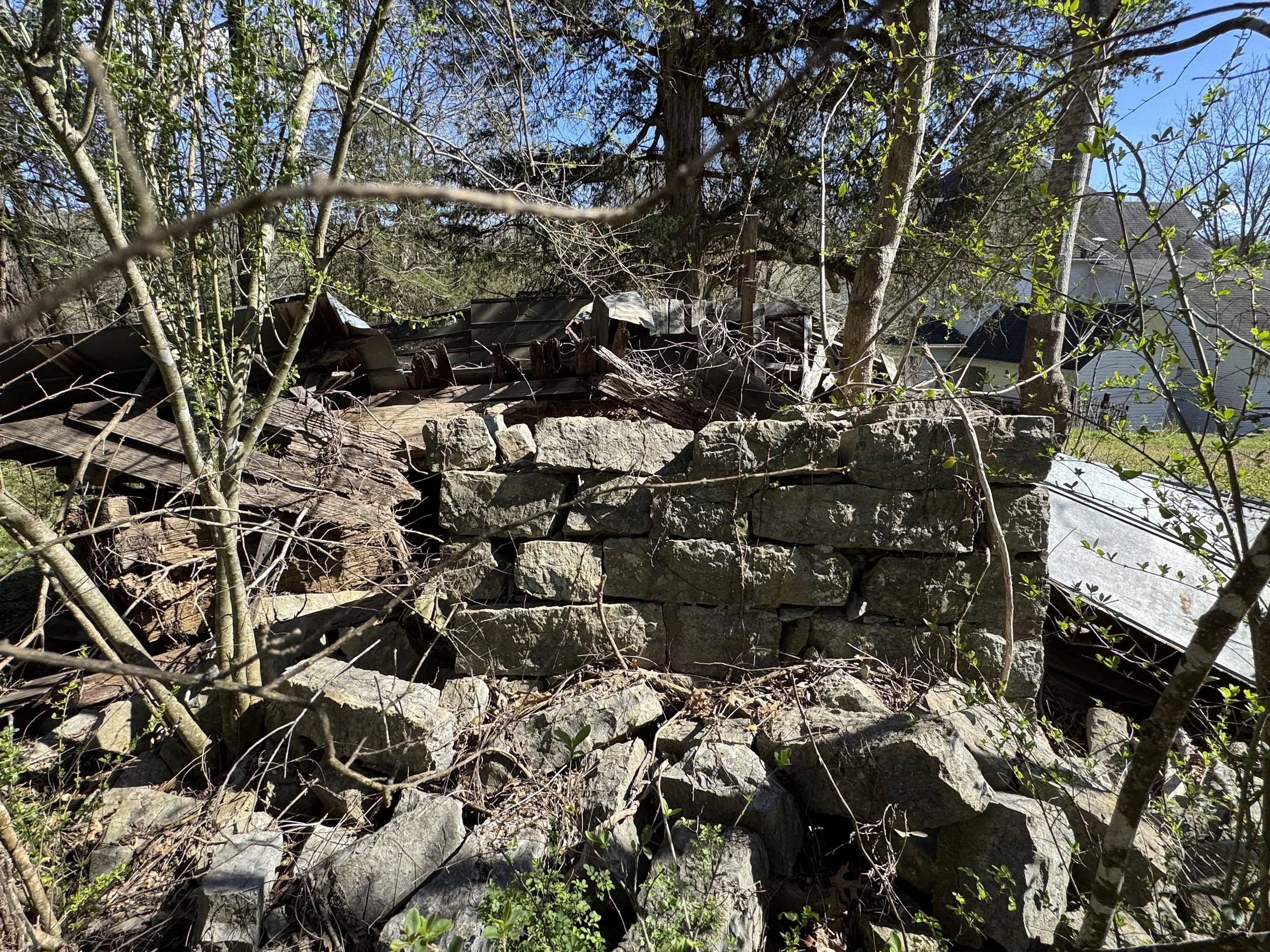
Chimney base from outside